
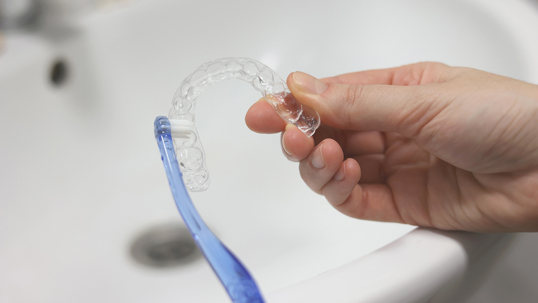
Yes, aligners are easy to care for when you build a few simple habits into your day. If you are wondering, if Invisalign is easy to take care of, the answer is that with a quick daily cleaning routine, consistent wear, and proper storage, you can keep your trays clear, fresh, and effective. Use these tips to simplify aligner care and keep your treatment on schedule.
Daily Care: Simple Habits That Keep Aligners Clean
A consistent routine prevents buildup, cloudiness, and odors while protecting your teeth and gums. For anyone asking if Invisalign is easy to take care of, a dependable cleaning plan makes all the difference.
Step-by-step cleaning routine:
Rinse aligners with cool or lukewarm water as soon as you remove them.
Gently brush the trays with a soft toothbrush reserved for aligners. Avoid toothpaste, which can be abrasive.
Use a clear, recommended aligner cleaner or a mild, clear, unscented soap. Rinse thoroughly before putting them back in.
Brush and floss your teeth before reinserting to avoid trapping food particles and plaque.
How often to clean: Clean aligners at least twice daily, morning and night, and give them a quick rinse after meals or snacks. If possible, do a brief brush-and-rinse after lunch to keep them clear. A short soak in an approved cleaner a few times a week helps prevent stubborn buildup.
Avoid these common mistakes:
No hot water, heat can warp the plastic.
Skip toothpaste, colored soaps, mouthwash with dyes, and harsh chemicals that scratch or stain.
Avoid soaking in vinegar or bleach, which can damage the trays and affect taste.
Do not leave aligners uncleaned after meals; residue can lead to odor and cloudiness.
Wearing and Handling: Keep Your Treatment on Track
Consistent wear and careful handling are key to predictable tooth movement and comfortable treatment.
Recommended wear time: Aim for 20–22 hours per day. Remove aligners only for meals, snacks, and oral hygiene. Consistency maintains steady pressure on teeth and keeps your timeline on track.
Safe insertion and removal:
Insert by seating the back teeth first, then press gently toward the front with your fingertips.
Remove by lifting at the back molars with your fingernails or a removal tool, then work forward. Avoid pulling from one corner only.
Do not bite aligners into place or twist them off; these habits can cause stress fractures.
Use your case every time: When aligners are out, place them in their ventilated case, never a napkin or pocket. This prevents accidental damage or loss and reduces contamination. Keep a case in your bag, backpack, or desk so you are never without one. Rinse aligners before placing them in the case if you can, and clean the case regularly with mild soap and water.
Eating, Drinking, and Oral Hygiene During Treatment
You can enjoy your usual foods with clear aligners as long as you remove your trays before eating. A few smart habits protect your aligners and your smile.
Foods and drinks to avoid while trays are in: Remove aligners for all food and for any drink that is hot, colored, acidic, or sugary, including coffee, tea, soda, sports drinks, wine, and juice. Only cool, plain water is safe while wearing trays. Heat can warp plastic; pigments and acids can stain or damage aligners and teeth.
Quick meal routine:
Take aligners out and place them in the case.
Eat and drink as usual.
Rinse your mouth with water; ideally brush and floss.
Rinse aligners and reinsert.
If brushing is not possible, swish with water, use a travel brush if available, and brush thoroughly at your next opportunity.
Brushing and flossing schedule: Brush at least twice daily and floss once per day. If you snack or drink sugary or acidic beverages, brush or at least rinse before putting aligners back in. This helps prevent staining, cavities, and white spot lesions.
After staining foods or sugary drinks: Rinse your mouth and aligners right away. Brush your teeth and gently brush the trays with a soft brush and clear soap before reinserting. If discoloration persists, use an approved aligner cleaning soak as directed.
Troubleshooting, Storage, and When to Contact a Professional
Most minor issues are easy to handle at home. Knowing when to call helps keep treatment safe and efficient.
Common issues and quick fixes:
Surface cloudiness: Improve your cleaning routine and add occasional approved soaks.
Persistent odor: Often indicates trapped plaque, brush and floss more thoroughly and clean aligners carefully.
Small, smooth cracks: You may be able to keep wearing the tray; avoid flexing and seek guidance if unsure.
Rough edges: You can very lightly smooth with an emery board, then confirm next steps with your provider.
Fit changes: If an aligner does not seat fully, use chewies as directed for a day or two. If it still will not seat, or if you missed wear time, do not advance to the next tray without checking in. Upload photos if available or schedule a quick visit for advice.
Proper storage:
Short-term: Keep aligners in their ventilated case whenever they are out. Do not wrap in tissues, leave in hot cars, or store near heat sources.
Long-term: When you switch to a new set, clean and dry the previous aligner thoroughly before storing it in a labeled case for backup, especially for travel.
Travel kit: Carry a case, a small soft brush, interdental picks, and travel-sized toothpaste to make care easy on the go.
When to contact your orthodontic provider: Call if you lose or break an aligner, experience sharp pain or significant rubbing, notice worsening cracks, have ongoing foul odor despite cleaning, or if an aligner will not seat flush after 48 hours of consistent wear. A provider can advise whether to move forward, go back a tray, provide a replacement, or schedule any needed adjustments.
Key Takeaways: Keeping Care Easy
If you are still asking, if Invisalign is easy to take care of, remember that success comes down to a few repeatable habits: clean aligners twice daily, wear them 20–22 hours, remove all food and most drinks, and store them in a case. With these steps, aligners stay clear, comfortable, and ready to do their job.