Terms & Conditions
Please read these terms and conditions ("terms and conditions", "terms") carefully before using the bietschorthodontics.com website (“website”, "service") operated by Bietsch Orthodontics ("us", 'we", "our").
Conditions of use
By using this website, you certify that you have read and reviewed this Agreement and that you agree to comply with its terms. If you do not want to be bound by the terms of this Agreement, you are advised to stop using the website accordingly. Bietsch Orthodontics only grants use and access of this website, its products, and its services to those who have accepted its terms.
Privacy policy
Before you continue using our website, we advise you to read our privacy policy about user data collection. It will help you better understand our practices.
Age restriction
You must be at least 18 (eighteen) years of age before you can use this website. By using this website, you warrant that you are at least 18 years of age, and you may legally adhere to this Agreement. Bietsch Orthodontics assumes no responsibility for liabilities related to age misrepresentation.
Intellectual property
You agree that all materials, products, and services provided on this website are the property of Bietsch Orthodontics, its affiliates, directors, officers, employees, agents, suppliers, or licensors including all copyrights, trade secrets, trademarks, patents, and other intellectual property. You also agree that you will not reproduce or redistribute the Bietsch Orthodontics’ intellectual property in any way, including electronic, digital, or new trademark registrations.
Applicable law
By using this website, you agree that the laws of Texas, without regard to principles of conflict laws, will govern these terms and conditions, or any dispute of any sort that might come between Bietsch Orthodontics and you, or its business partners and
Limitation on liability
Bietsch Orthodontics is not liable for any damages that may occur to you because of your misuse of our website.
Bietsch Orthodontics reserves the right to edit, modify, and change this Agreement at any time. We shall let our users know of these changes through electronic mail. This Agreement is an understanding between Bietsch Orthodontics and the user, and this supersedes and replaces all prior agreements regarding the use of this website.
Texting Communication
Bietsch Orthodontics reserves the right to text you with any phone number provided to aid in giving you the best experience possible. This will allow you to schedule, make changes, or ask the offices any questions. Messages will be sent to confirm and remind appointments and to reach out to patients as needed. Message frequency may vary pending patient’s treatment. Message and data rates may apply. For customer care please text the office at (972) 934-6222.
Please note you may always opt out by texting STOP to cancel.
Building Confidence, One Smile at a Time!
-
Braces BusCall us at (972) 934-6222 to find out more and schedule a consultation today!
-
New & Existing PatientsResources for All Your Orthodontic Needs
-
Community InvolvementThe Many Ways We Give Back
-
Meet Our TeamThe Bietsch Orthodontics Team
Our Smile Specialists
Experienced & Caring
-
 Dr. Tom BietschOrthodontist, Owner
 -
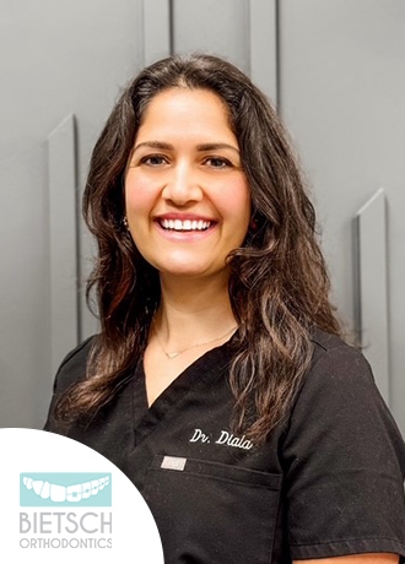
Dr. Diala ChanineOrthodontist
-
ESPiNMascot
-
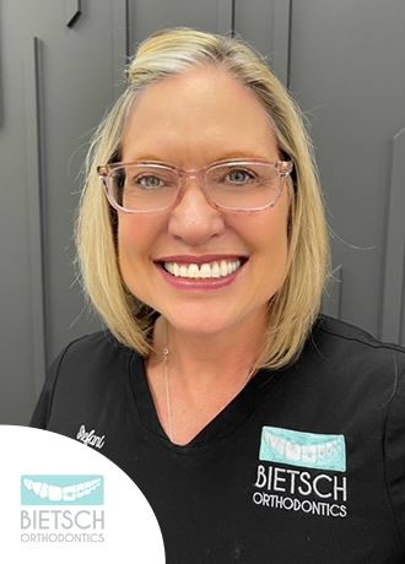
StephanieTreatment Coordinator
-
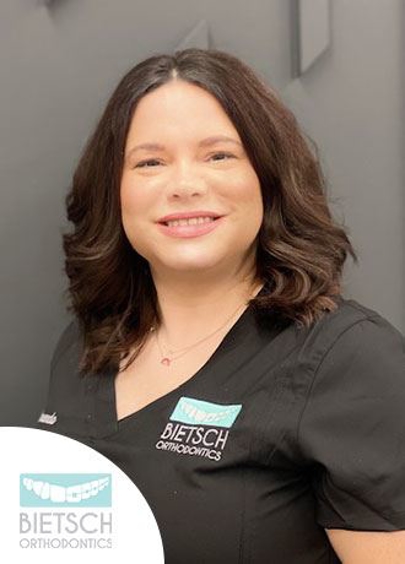
AmandaTreatment Coordinator
-
KirstenFront Team Lead, Brace Bus Specialist










Have Questions? We Have Answers!
-
If I have braces, do I still need dental checkups every six months?You should continue with regular dental visits and cleanings every 6 months. Some patients will need to increase the number of times they receive professional cleanings to every 3-4 months to help maintain good gum health since it is slightly more difficult to keep teeth and gums clean with braces.
-
Do I need to brush my teeth more often if I have braces?With braces, you should brush your teeth at least three times a day to keep your teeth, gums, and mouth healthy and clean. You should also floss daily to get in between your braces where your brush isn't able to reach. Electric toothbrushes, such as Sonicare, and waterpicks are excellent and help to keep your teeth and gums clean and healthy.
-
Do Braces Hurt?You will feel soreness with your new braces due to the small amount of discomfort as your teeth, gums, cheeks, and mouth get used to your new braces. It generally a few days depending on the patient.
-
Do I need retainers?Teeth are moving throughout life regardless if you have had braces or not due to the extraordinary amount of pressure we put on our teeth. Therefore, retainers are vital to maintaining the position of your teeth after braces are removed and beyond. It is recommended to wear them all the time once braces are removed and eventually, you can wear them just at night once instructed.
-
If I break part of my braces or have an emergency, what should I do?Rarely do true orthodontic emergencies occur, however when they do we are here to make sure they are taken care of for you. Call our office and we make arrangements to see you and make you comfortable.
There are some things that can be done to make your braces feel better until we see you.
Broken/loose bracket: Remove the bracket if possible place it into a bag and bring it with you to your next appointment.
Pokey wire: Use wax to stick on the area until we see you. If the wire has moved to one side or has come out of the bracket in the back, use needle-nose pliers to put the wire back in back bracket or shift it back to the other side. If that does not work cut the wire with fingernail cutters or wire cutters and pull the wire out to make yourself comfortable.
After alleviating your discomfort, it is very important that you still call our office as soon as possible to schedule a time to repair the problem. Allowing your appliance to remain damaged for an extended period of time may result in disruptions to your treatment plan. -
How long does an average patient wear braces?Every treatment plan is different and everyone’s teeth move a little differently, however, most treatment times are from 15-24 months.
-
What foods can I not eat?A simple rule to follow is to avoid anything that is hard, sticky, or chewy. These foods can cause damage to the braces and can cause treatment time to be extended. Examples of foods to avoid are candy, popcorn, a hard pizza crust, ribs on the bone, and gum.
-
Will my braces interfere with my school activities like sports, playing an instrument, or singing?Braces will not interfere with any school activities, however, there is an adjustment period of getting used to them when playing an instrument and singing. When playing most sports, a mouthguard to protect your teeth and braces is recommended and will not prevent you from participating.
-
What is a "Two-Phase" Orthodontic Treatment?
This refers to two separate times when a child receives orthodontic treatment
The first phase of treatment is done when the child still has baby teeth and the focus is on bone changes, growth modification, and tooth guidance. This generally includes orthodontic appliances and may or may not include braces on the permanent teeth. The advantages of doing phase I treatment include:
• influence jaw growth in a positive manner
• improve the width of the dental arches
• reduce the need to extract permanent teeth
• reduce or eliminate the need for jaw surgery
• lower the risk of trauma to protruded front teeth
• correct harmful oral habits
• improve esthetics and self-esteem
• simplify and shorten treatment time for definitive orthodontic treatment (phase II)
• increase stability of final treatment results
• reduce the likelihood of impacted permanent teeth
• improve speech development
• improve the position of the first molars
• guide permanent teeth into more favorable positions
• improve lip competence
• preserve or gain space for erupting teeth
• improve compliance before the busy teenage years
The second phase of treatment is started when the child has most or all of their permanent teeth. This entails moving all the teeth either with braces or aligners and sometimes includes appliances. -
What's the best age to visit the Orthodontist?
Just about everyone can benefit from orthodontic treatment at some point in their life. There is no wrong age to see an orthodontist to be evaluated to improve the look and feel of your smile or improve your bite.
The American Association of Orthodontists and the American Dental Association recommends that children be seen by an orthodontist by the age of seven to be sure that the teeth and bones are developing properly.